



The Functional Extremities Method (FE Method™)
Assess Function. Treat With Purpose.
The FE Method takes the functional assessment framework into clinical application. Its primary intervention is the chiropractic adjustment. Its goal is the clinical restoration of function.
Developed primarily for chiropractors. Built on principles every qualified musculoskeletal clinician can use.
The End Goal
Many Means. One End: Restored Function.
Identifying a functional deficiency is the beginning. The purpose of the FE Method is what comes next: the clinical restoration of function, confirmed by reassessment.
The Primary Intervention
The FE Method teaches the chiropractic adjustment as its primary intervention for relevant extremity findings, used when clinically indicated.
The Underlying Principle
Arthrogenic inhibition and the restoration of proprioception. Clinicians who understand these principles have more than one means to the same end.
The End
Restored function. Every intervention is judged by the functional response on reassessment, not by the technique itself.
A positive muscle test does not, on its own, call for an adjustment, and no single intervention is assumed to correct the underlying cause.
A Systematic Approach
Start Simple. Go Deeper When It’s Needed.
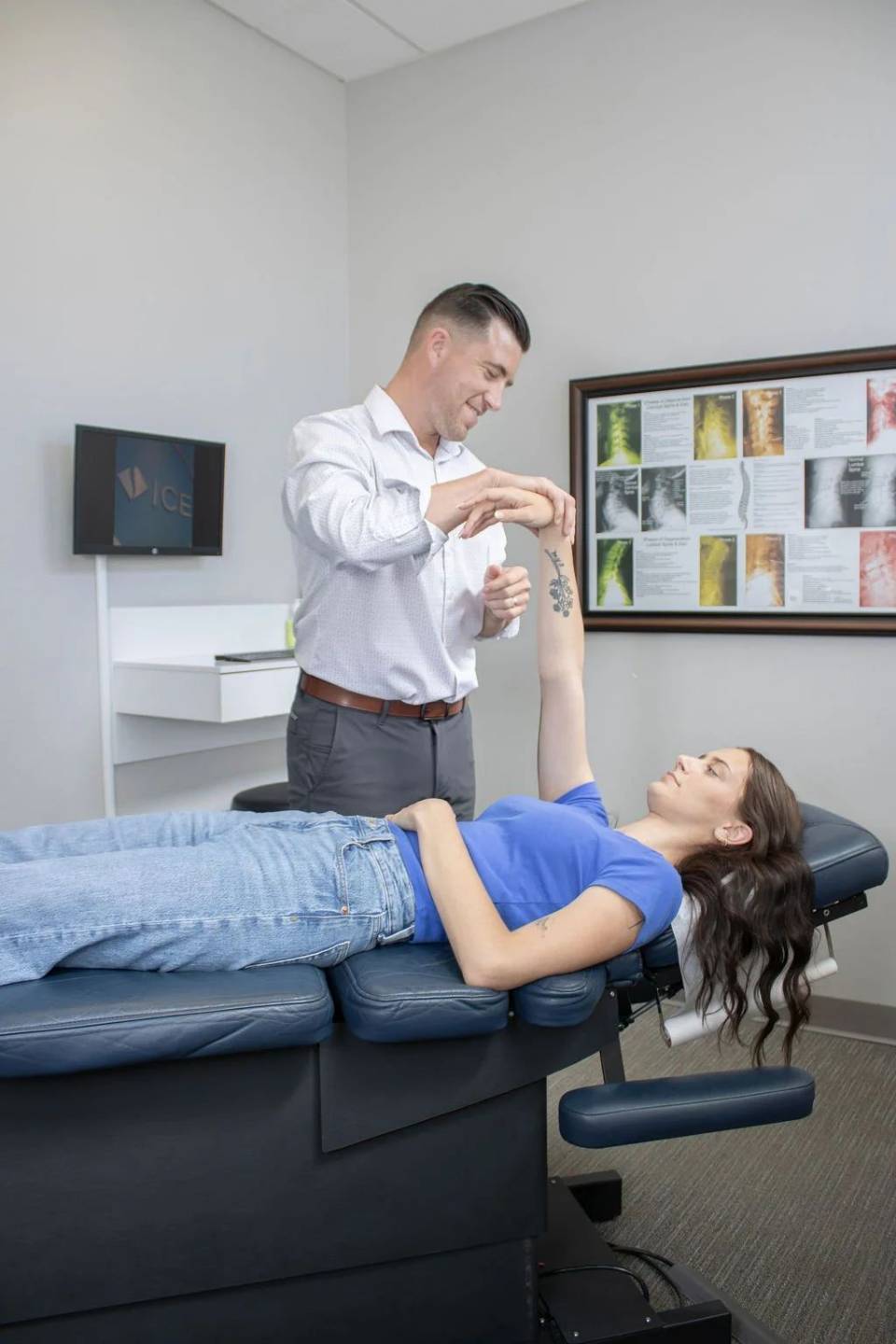
The FE Method teaches a systematic approach to addressing functional weak links. It starts with the most direct options and adds depth only when the functional response calls for it.
That layered approach gives clinicians many options: extremity-specific chiropractic technique, relevant soft-tissue and spinal considerations, and regional contributors, each considered in an organized sequence rather than as isolated interventions.
The hands-on adjustment instruction is intended for appropriately qualified chiropractors. Physical therapists, osteopathic practitioners and other qualified musculoskeletal clinicians can apply the same principles of assessment, arthrogenic inhibition, proprioceptive restoration and reassessment through the methods within their scope of practice.
The goal is not simply to treat more joints. It is to evaluate the musculoskeletal system more completely.
Clinical Value
A Built-In Screening Check.
Reassessment shows whether function has been restored. When it has not, that is clinical information, not a reason to repeat the same technique.
If an appropriate, layered approach does not restore function, it may indicate to the clinician a deeper problem that warrants further investigation, such as imaging or referral. That built-in check is valuable for any musculoskeletal practitioner.
When a finding persists
- Confirm the original assessment and testing conditions.
- Consider relevant soft-tissue contributors, and reassess.
- Consider spinal, regional and neurologic contributors, and reassess.
- If function is still not restored, broaden the differential and consider further evaluation, imaging or referral.
This is a conditional clinical framework, not a mandatory series of treatments. A persistent finding does not, on its own, establish tissue pathology, spinal dysfunction or a specific diagnosis.
The Spine as the Foundation
A Clinical Philosophy, Not a Rule.
The spine is an important structural and neurologic foundation. In the FE Method, relevant spinal relationships are considered as part of the clinical picture and addressed when clinically indicated.
Not every extremity weakness originates from the spine, and spinal adjustment is not universally required. Keep using the spinal technique you already use.
FAQ
Frequently Asked Questions
Is the FE Method just more adjustments?
No. The adjustment is its primary intervention, but the goal is the clinical restoration of function. The FE Method teaches a systematic, layered approach to functional weak links, with reassessment guiding every next step.
I’m not a chiropractor. Is the FE Method relevant to me?
Yes. It was developed primarily for chiropractors, and its hands-on adjustment instruction is intended for appropriately qualified chiropractors. The principles behind it (assessment, arthrogenic inhibition, the restoration of proprioception and reassessment) apply across musculoskeletal disciplines, and other qualified clinicians can work toward the same end through the methods within their scope.
Does every positive muscle test need an adjustment?
No. A finding is evaluated for clinical relevance first. Intervention is considered when indicated, and reassessment shows whether the functional response has meaningfully changed.
What if function isn’t restored?
That is useful clinical information. When an appropriate, layered approach does not restore function, it may point to a deeper problem that warrants further investigation, such as imaging or referral.
Is this a spinal adjusting course?
No. Relevant spinal relationships are considered and addressed when clinically indicated, and you can keep using your own spinal technique.
Where can I see exactly what’s included?
On the Programs page: the full curriculum, the lesson structure, the supporting spinal library, enrollment and the upgrade option for FEA students.
The FE Method™
See Everything the FE Method Includes.
The curriculum, the lesson structure, how you’ll learn and how to enroll, all in one place. The FE Method is in development, and the interest list hears first when enrollment opens.
Start with a free clinical guide
Functional Extremities provides education for licensed healthcare professionals. Apply what you learn within your scope of practice and the regulations where you practice. Course content is not a substitute for clinical judgment, diagnosis or referral.